
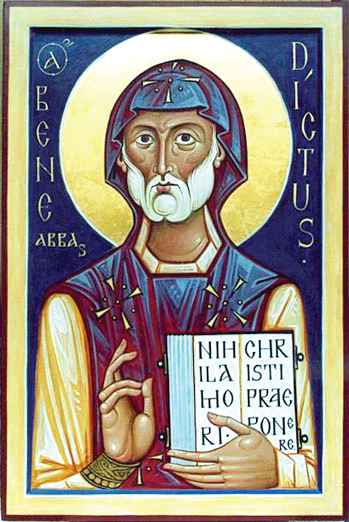
A reflection by Cedar team member Regina Walton.
Just a few days ago, the Church observed the feast day of St. Benedict of Nursia, author of the Rule of St. Benedict, a handbook for monks about how to live in community. Even fifteen centuries after his death, thousands of monks and nuns across the globe use Benedict’s guide to order their lives of prayer and service.
What is perhaps more surprising, however, is the large number of laity and clergy who are not vowed religious, but who still turn to Benedict’s little book for guidance as they live out their baptismal promises in the midst of family relationships, secular jobs, and everyday responsibilities. I am one of these non-monks who have been deeply formed by St. Benedict’s wisdom, in my prayer life, in the classroom, and for many years as a priest in parish ministry.
The word “Rule” means a pattern or guide, the way a ruler helps a person to draw straight lines or take accurate measurements. Benedict opens with instructions for the reader to listen “with the ear of your heart.” He is writing about community, and how all community members need to practice listening and being present: to the Abbot and others in authority; to each other, and especially to God. One of Benedict’s mottos is Ora et labora, or “prayer and work.” He instructs his readers to bring a spirit of prayerfulness to all their work, especially to repetitive day-to-day tasks. Yard work, doing dishes, and tidying up can all be opportunities to turn our mind to the goodness of God. For Benedict, following Christ means integrating prayer into our ordinary tasks, and bringing this spirit of prayer and attentiveness into our day-to-day relationships.
Benedict believes that leaders need to know their individual community members well. There is no one-size-fits-all way to be a monk or a Christian. Different people have different gifts and strengths, different personalities, different abilities, and are at different stages of life. The Abbot or leader needs to take all this into account, in order to faithfully shepherd their flock. And, everybody needs a little grace—Benedict intended his Rule to be for beginners, with “nothing hard, nothing burdensome,” just simple and clear guidelines for how to be in relationship with each other, and how to honor God in their worship and livelihood.
Benedict was writing in the 6th century, during the collapse of the Roman empire. He envisioned his monastery as a place of refuge from political instability and strife. Simplicity and sustainability were important values to ensure that the monks could survive the societal collapse happening around them, continue their life of prayer interrupted, and also offer hospitality and safety to travelers. Benedict thought of the monastery as a kind of workshop for the renovation of souls. He wrote, “Your way of acting should be different from the world’s way; the love of Christ must come before all else.”
The Rev. Dr. Regina Walton is Editor and Content Developer for Discipleship Initiatives at Forward Movement, and a member of the Cedar team.
[Photo: Public Domain, via Wikimedia Commons]