Category: Discipleship

  • And somehow, Christ met me there

    And somehow, Christ met me there

    “One of the most powerful things a person can say is, ‘Let me tell you what God has done in my life.’ Not because every story is dramatic. Not because every story is finished. But because testimony creates connection.

    When people share honestly about grief, healing, doubt, forgiveness, addiction, loneliness, wonder, or joy…something sacred happens. Walls come down. Shame loses power. Hope becomes imaginable.

    So many people today feel unseen. They carry hidden pain. Hidden questions. Hidden longing.

    And often what opens the door to faith is not argument, but authenticity. Someone saying:

    ‘I was lost, too.’

    ‘I struggled, too.’

    ‘I wondered, too.’‘

    ‘And somehow, Christ met me there.’”


    The above is an excerpt from a new short video course to support you and your worshipping community to grow in faith. Cedar at Forward Movement is excited to introduce “Sharing our Stories” to help you to understand, develop, and pray with your own story of faith in conversation with stories from the Bible, the saints, and other Christians. The course’s three ten-minute videos will also be available as video podcasts and printed transcripts, all FREE at cedar.forwardmovement.org starting August 4.

    Designed for adult formation sessions or leadership retreats, the videos may be watched in person or online in a group with guided conversation, or at home and then discussed later in small group settings. This course is ideal for one 90-minute session or three separate shorter sessions.

    The course features: the Rev. Robert Hendrickson, the Rev. Andrew Stravitz, and Kristin Tovar who teach practices of story sharing that will help you further engage the story of God in your life. Exploring a theology of friendship with Christ through modern and ancient stories, you and your group (formation group, Vestry or church committee, small group, etc.) will be guided through a meaningful and engaging practice designed to help you and your church share your story and to grow in love of God and neighbor.

    If you haven’t already, subscribe to our newsletter to be the first to receive the links to the course in all of its formats. If you would like to sign up for the beta testing group that will provide feedback on this course and its impacts, please email tdevine@forwardmovement.org.

    Later, we look forward to sharing bonus episodes further detailing Kristin and Andrew’s stories and highlighting local Episcopalians based in the Diocese of Arizona whose lives have been transformed in Christ.

    -Taylor Devine, Church Relations Coordinator for Discipleship Initiatives

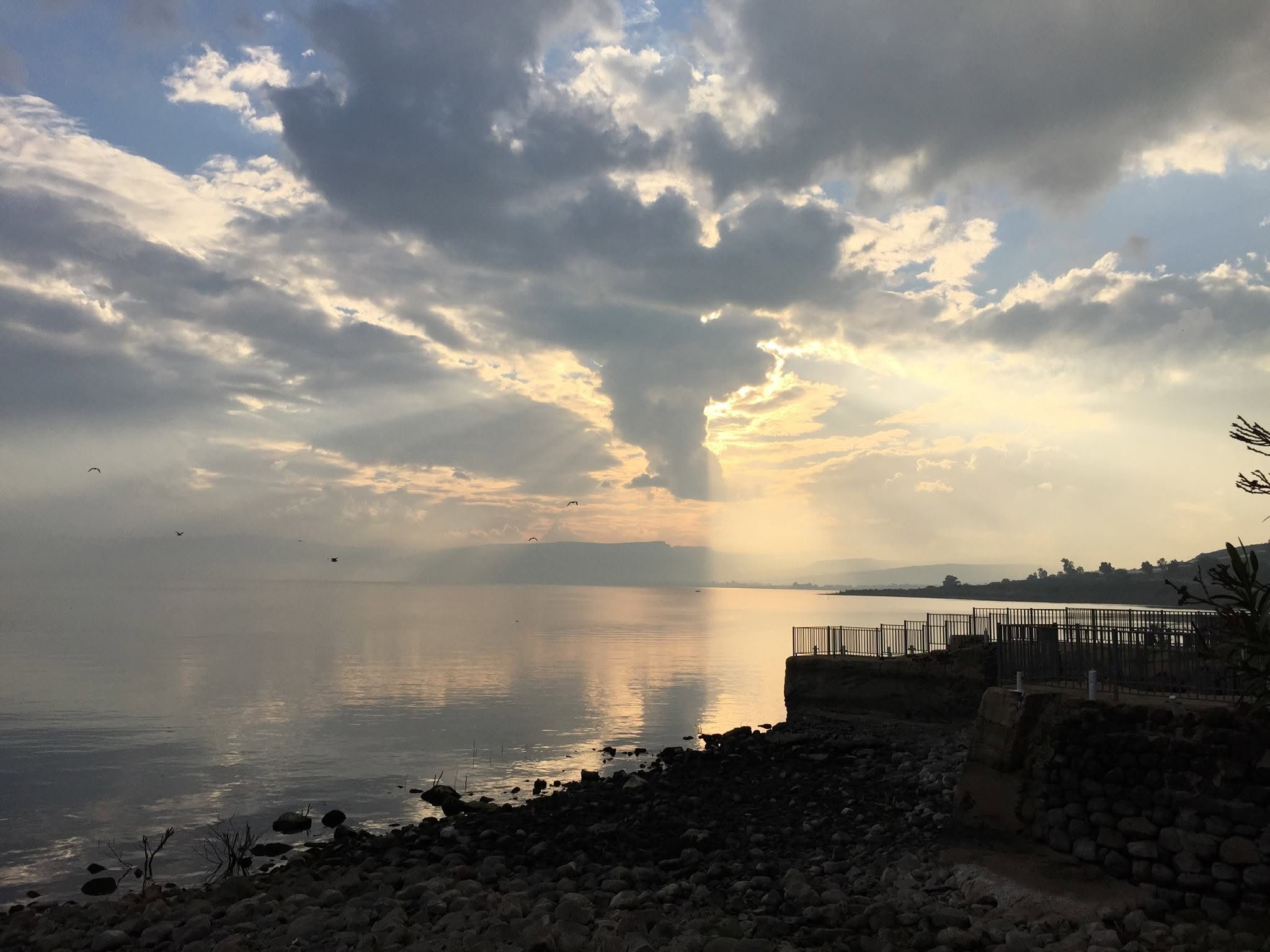
    [Photo by RenewalWorks Director Loren Dixon. Nova Scotia, Canada.]

  • Discipleship in Community: St. Benedict of Nursia

    Discipleship in Community: St. Benedict of Nursia

    A reflection by Regina Walton, Editor and Content Developer for Discipleship Initiatives

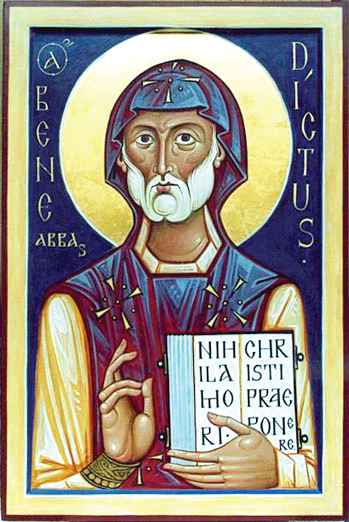
    Just a few days ago, the Church observed the feast day of St. Benedict of Nursia, author of the Rule of St. Benedict, a handbook for monks about how to live in community. Even fifteen centuries after his death, thousands of monks and nuns across the globe use Benedict’s guide to order their lives of prayer and service.

    What is perhaps more surprising, however, is the large number of laity and clergy who are not vowed religious, but who still turn to Benedict’s little book for guidance as they live out their baptismal promises in the midst of family relationships, secular jobs, and everyday responsibilities. I am one of these non-monks who have been deeply formed by St. Benedict’s wisdom, in my prayer life, in the classroom, and for many years as a priest in parish ministry.

    The word “Rule” means a pattern or guide, the way a ruler helps a person to draw straight lines or take accurate measurements. Benedict opens with instructions for the reader to listen “with the ear of your heart.” He is writing about community, and how all community members need to practice listening and being present: to the Abbot and others in authority; to each other, and especially to God. One of Benedict’s mottos is Ora et labora, or “prayer and work.” He instructs his readers to bring a spirit of prayerfulness to all their work, especially to repetitive day-to-day tasks. Yard work, doing dishes, and tidying up can all be opportunities to turn our mind to the goodness of God. For Benedict, following Christ means integrating prayer into our ordinary tasks, and bringing this spirit of prayer and attentiveness into our day-to-day relationships.

    Benedict believes that leaders need to know their individual community members well. There is no one-size-fits-all way to be a monk or a Christian. Different people have different gifts and strengths, different personalities, different abilities, and are at different stages of life. The Abbot or leader needs to take all this into account, in order to faithfully shepherd their flock. And, everybody needs a little grace—Benedict intended his Rule to be for beginners, with “nothing hard, nothing burdensome,” just simple and clear guidelines for how to be in relationship with each other, and how to honor God in their worship and livelihood.

    Benedict was writing in the 6th century, during the collapse of the Roman empire. He envisioned his monastery as a place of refuge from political instability and strife. Simplicity and sustainability were important values to ensure that the monks could survive the societal collapse happening around them, continue their life of prayer interrupted, and also offer hospitality and safety to travelers. Benedict thought of the monastery as a kind of workshop for the renovation of souls. He wrote, “Your way of acting should be different from the world’s way; the love of Christ must come before all else.”

    [Photo: Public Domain, via Wikimedia Commons]

  • There Are No Ordinary People

    There Are No Ordinary People

    A reflection by Taylor Devine, Church Relations Coordinator for Discipleship Initiatives.

    Early this month, Robert Hendrickson and I gathered with local Church leaders to film “Telling Our Stories,” a short course to be released August 4. Its approach to neighborliness, to friendship, and to the dignity of people and their stories in God’s eyes reminded me of a sermon given by C.S. Lewis, which I commend as a reflection any time, but perhaps especially when in need of a shot of that paradoxical Christian humility and joy! We look forward to sharing more information about the course over the coming weeks.

    “It may be possible for each to think too much of his own potential glory hereafter; it is hardly possible for him to think too often or too deeply about that of his neighbour. The load, or weight, or burden of my neighbour’s glory should be laid daily on my back, a load so heavy that only humility can carry it, and the backs of the proud will be broken.

    It is a serious thing to live in a society of possible gods and goddesses, to remember that the dullest and most uninteresting person you talk to may one day be a creature which, if you saw it now, you would be strongly tempted to worship, or else a horror and a corruption such as you now meet, if at all, only in a nightmare.

    All day long we are, in some degree, helping each other to one or other of these destinations. It is in the light of these overwhelming possibilities, it is with the awe and the circumspection proper to them, that we should conduct all our dealings with one another, all friendships, all loves, all play, all politics.

    There are no ordinary people. You have never talked to a mere mortal. Nations, cultures, arts, civilization—these are mortal, and their life is to ours as the life of a gnat. But it is immortals whom we joke with, work with, marry, snub, and exploit—immortal horrors or everlasting splendours.

    This does not mean that we are to be perpetually solemn. We must play. But our merriment must be of that kind (and it is, in fact, the merriest kind) which exists between people who have, from the outset, taken each other seriously—no flippancy, no superiority, no presumption. And our charity must be a real and costly love, with deep feeling for the sins in spite of which we love the sinner—no mere tolerance or indulgence which parodies love as flippancy parodies merriment. Next to the Blessed Sacrament itself, your neighbour is the holiest object presented to your senses.”

    -Excerpt from Weight of Glory sermon by C.S. Lewis, June 8, 1941, at the Church of St. Mary the Virgin, in Oxford.

    [Photo by LuAnn Hunt on Unsplash]

  • Freedom Must Be Paired With Responsibility

    Freedom Must Be Paired With Responsibility

    By Robert Hendrickson, Chief of Discipleship Initiatives

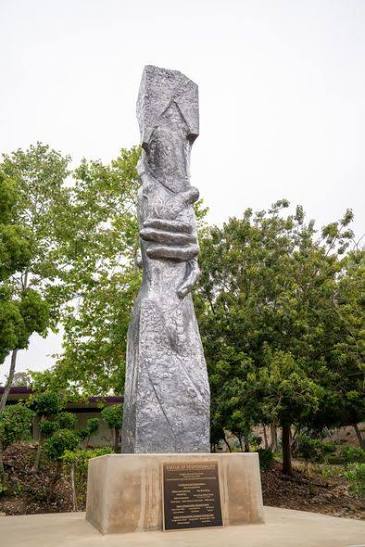
    In June of 2025, Alliant International University in San Diego unveiled a new statue which features two hands clasped at the wrists—one reaching down, the other reaching up. It is named the Statue of Responsibility and is in honor of Dr. Viktor Frankl—Holocaust survivor, psychiatrist, and author. The statue is a response to Frankl’s call for a West Coast compliment to the Statue of Liberty, because “freedom must be paired with responsibility.”

    For Christians, Independence Day offers us an opportunity not only to give thanks for the blessings of our nation, but also to reflect on what responsible citizenship requires.  

    Freedom is never simply a collection of rights; it is also a call to duty. Every republic depends upon citizens willing to sacrifice for the common good—to serve neighbors, participate in civic life, uphold justice, and place the welfare of future generations ahead of personal convenience.

    For Christians, that calling begins with an even deeper allegiance. Our highest citizenship is in the Kingdom of God. We honor our nation best when our love of country is shaped by our love of Christ. Patriotism is healthiest when it is humble, grateful, and willing to acknowledge both our nation’s achievements and its failures.

    The freedoms we celebrate each Fourth of July were secured by generations who accepted responsibility as well as privilege.  

    We honor their sacrifices not only by enjoying liberty but by using it wisely. As followers of Jesus, that means praying for our leaders, serving our communities, caring for the vulnerable, speaking truth with charity, and working for justice and reconciliation.

    Just as a healthy church is made up of people who are spiritually healthy, so too is a healthy nation made up of people who are informed and committed to a shared set of principles. That requires a level of dedication to the basic premise that citizenship is an active duty, not a passive right.

    I might say the same of faith. It is an active commitment to the good of the world for the sake of Christ. It is not a passive right that can be passed on without also passing on a sense of mutual responsibility and self-sacrifice. The American experiment has always depended upon citizens of character. Christians have a unique contribution to make—not because we seek power, but because we seek to embody Christ’s self-giving love in public life. As we gather with family and friends this Independence Day, may we give thanks for the gift of freedom, renew our commitment to faithful citizenship, and remember that the strongest republic is built by people who understand that liberty always carries responsibility.

    [Photo from www.statueofresponsibility.org]

  • Healthy Congregations Are Built One Disciple at a Time

    Healthy Congregations Are Built One Disciple at a Time

    By Robert Hendrickson, Chief of Discipleship Initiatives

    The spiritual vitality of a church is not something separate from the spiritual lives of its members; rather, it emerges from them.

    When individuals are growing in prayer, worship, Scripture, service, generosity, and a living relationship with Jesus Christ, the whole congregation is strengthened. At the same time, faithful communities create the conditions in which individuals can flourish.

    Spiritual health and congregational vitality are deeply interconnected, each nurturing and reinforcing the other.

    This is why thoughtful reflection and honest assessment matter. Congregations often sense a desire for deeper discipleship, but struggle to identify where growth is needed or what next steps to take.

    Resources such as RenewalWorks, a ministry of Forward Movement, along with other discipleship tools and frameworks, help churches ask important questions together: How are people growing in faith? What practices are helping them deepen their relationship with Christ? Where are obstacles preventing spiritual growth? How can the congregation better support disciples on the journey?

    Spiritual discernment invites communities into prayerful deep work, helping them listen to God, understand their unique context, and discover practical ways to cultivate deeper faith.

    In doing so, congregations become more faithful witnesses to the transforming love of Christ in the world.

    [Photo by Vasilina Sirotina on Unsplash]

  • Journeying Towards the True Light

    Journeying Towards the True Light

    By Robert Hendrickson, Chief of Discipleship Initiatives

    A number of years ago, a seminary classmate and I traveled together in China. It was 2008, the year of the Beijing Olympics, and Beijing had never looked better—or so it seemed.

    Ancient neighborhoods had been bulldozed to make way for gleaming developments. Winding alleys had become polished commercial districts. A street I had known for years, filled with backpacker hostels, cafés, and small shops, had been transformed into a showcase for the “new” Beijing. It even had a Starbucks, built not far from a shop that once sold shirts protesting the destruction of old Beijing.

    One morning I woke my friend before dawn and suggested we go watch the flag-raising ceremony in Tiananmen Square. In years past, the crowd had mostly consisted of a few early risers, retirees, and curious visitors. But during the Olympics, the square was packed with tourists.

    What struck me most, however, was not the crowd. It was a giant television screen stretching across the square. Beijing’s smog had become so thick that a televised sunrise was projected onto the screen, so people would know when the ceremony was about to begin.

    There, amid the haze, a fake sunrise glowed while patriotic music filled the air.

    The whole thing felt strangely unreal. So much of the city’s history had been swept away and replaced with a carefully managed image. It seemed fitting that everything revolved around an artificial sunrise.

    A few days later, my friend and I left Beijing and headed toward the mountains of what is often called Shangri-La, on the edge of Tibet. After a difficult journey, we arrived at a small inn attached to a monastery high in the Himalayas.

    The innkeeper asked if we wanted to sleep on the roof. Despite the cold, we eagerly agreed.

    Wrapped in yak-fur blankets, exhausted from travel and altitude, we climbed the stairs and stepped through the rooftop door. Both of us stopped immediately.

    Above us stretched a sky unlike anything we had ever seen.

    Living in Manhattan, we had forgotten what darkness looked like. Beijing’s lights and smog had obscured the heavens. But here, at nearly 12,000 feet, above the clouds and far from any city, the stars blazed across the sky.

    There was almost no noise. Just the distant sounds of monks finishing their evening prayers, the rustling of horses settling for the night, and the quiet conversation of fellow travelers.

    The stars illuminated the mountains and the valley below. We stood speechless, overwhelmed by a reality that had been there all along but that we had rarely been able to see.

    In that moment, who we had been seemed far away, and who we might yet become seemed a little clearer.

    That experience has stayed with me because it reminds me of faith.

    We spend much of our lives focused on false suns—success, politics, screens, anxieties, achievements, and failures. They dominate our attention and convince us they are ultimate. Yet they often leave us disconnected from what is most true.

    Discipleship is the journey away from those false lights.

    It strips away illusion and invites us to see reality as it truly is. It teaches us humility before the greatness of God and helps us recognize the vastness of a love that surrounds us even when we barely notice it.

    The light of Christ is not artificial. It is not manufactured or projected. It is the light that shines in the darkness and has not been overcome.

    Yet to glimpse it, we must be willing to take the journey. We must be willing to leave behind what is familiar, to look beyond the distractions that fill our days, and to open ourselves to wonder.

    Only then do we begin to see what has been there all along: the immense love of God stretched across the heavens and offered personally to each of us.

    [Photo by Weichao Deng on Unsplash]

  • Defining—and Demystifying—Discipleship

    Defining—and Demystifying—Discipleship

    By Regina Walton, Editor and Content Developer

    During Lent, the Cedar team offered a webinar series that explored the theme Defining Discipleship, with guest presentations by four innovative leaders from across the Episcopal Church. This theme grew out of the realization on the Forward Movement staff that, while we talk about discipleship all the time, we rarely stop to define it, or to see if we all share a common understanding of what it is!

    We are now delighted to offer the edited video presentations plus Discussion Guides as free resources for you to use in your congregations or ministry contexts.

    Highlights of this series, for me, included:

    • learning from Dr. Scott MacDougall that there really is no one recipe for discipleship; though there are core principles and values in Scripture, so much of how we decide to follow Jesus reflects our own circumstances and context.
    • The Rev. Canon Stephanie Spellers shared with us the “Four Prophecies of the ‘Nones’ and ‘Dones’ for the Church,” which I found provocative and exciting.
    • The Rev. Nurya Love Parish reminded us that the life of discipleship always involves risk, and she shared movingly about her own experience of taking a big risk to start a new Episcopal farm ministry with young adults.
    • And the Rev. Canon Ranjit Mathews shared examples of intercultural friendships across the Anglican Communion that challenged him to live a “cross-shaped life,” and to rethink his approach to Christian missions work.

    One of our goals on the Cedar team is to spark conversation about discipleship and renewal across the Episcopal Church and beyond—we hope that these videos spark conversation for you in your community. And if you use these videos in an adult education hour, Vestry retreat, or diocesan gathering, we’d love to hear your feedback. Thanks for joining us in conversation!

    In Christ,

    Regina Walton

    Editor and Content Developer for Discipleship Initiatives

    [Photo by Michael Held on Unsplash]

  • Pentecost and Discipleship: Introducing Cedar at Forward Movement

    Pentecost and Discipleship: Introducing Cedar at Forward Movement

    By Regina Walton, Editor and Content Developer

    On the Day of Pentecost, the disciples, filled with the Holy Spirit, begin to teach and preach in all the languages of the Jewish diaspora. Acts records the response of those who witnessed this miraculous feat of communication: “. . . in our own languages we hear them speaking about God’s deeds of power.” Then they ask each other, “What does this mean?”

    Just as on that first Day of Pentecost, people still have a deep need to hear about God’s deeds of power in their own language. Sometimes, that means literal translation from one language to another. In our own age, however, “translation” often involves moving to other platforms; from print to digital, or from text to video, podcasts, or webinars.

    More and more, we need to “translate” the good news of the gospel to those coming from entirely secular contexts, who have no previous experience with church or Christianity at all. And we need to make ourselves understandable to those coming from churches with theologies that differ in significant ways from the teachings of the Episcopal Church. If you spend any time with teens, you know there is also significant translation work happening across generations. Even literal translation—say, from English to Spanish—is often not impactful without attention to differences in culture and context.

    The Center for Discipleship and Renewal (Cedar) at Forward Movement arises out of the pressing communication needs of this moment in the Church. In its 91st year, Forward Movement has been recognized as a trusted partner to help Episcopalians and other Christians deepen their relationship with God and claim their baptismal gifts. The support of the J.C. Flowers Foundation and the Episcopal Church has made an exciting expansion of Forward Movement’s ministries possible in a number of areas.

    The Center for Discipleship and Renewal (Cedar) is a new discipleship initiative of Forward Movement focused on: 

    • creating transformational discipleship resources for the Episcopal Church
    • supporting leaders as they form disciples in their congregations and ministry contexts
    • sparking conversation on discipleship and church renewal 
    • becoming a hub of connection for clergy and lay leaders  

    Our work will be fully integrated with Forward Movement’s other ministries and resources, and its mission to inspire disciples and empower evangelists.

    You can learn more about our team here. Please share this email with others who may wish to subscribe to our e-newsletter and learn about new discipleship resources, curricula, and events across multiple platforms.

    As the first disciples bravely spoke in languages previously unfamiliar to them, we too need to speak boldly about God’s love and deeds of power in new ways. We know, as they did, that the Holy Spirit will inspire and equip all of us in this holy work.

    In Christ,

    Regina Walton

    Editor and Content Developer for Discipleship Initiatives at Forward Movement

    [Photo by David Bumgardner on Unsplash]

  • From the Director

    From the Director

    Screenshot

    By Robert Hendrickson, Chief of Discipleship Initiatives

    Dear Friends in Christ,

    Not long ago, I watched my son practice a simple but powerful sentence: “There are two of us, and I would like to sit in the front row.”

    He whispered it over and over as we waited in line for a roller coaster, preparing himself to speak confidently, past his autism, to the ride attendant. It was just one sentence, but it was a mountain he was climbing, word by careful word (you can see him practicing in the picture attached).

    Perseverance isn’t always loud or dramatic.

    Sometimes it looks like quietly rehearsing your lines, preparing your heart, steadying your nerves for the next moment. It’s one of the most Christian of virtues—not because we’re told to grit our teeth and push through—but because we follow a Savior who, for the joy set before us, endured the cross.

    Jesus didn’t avoid struggle. Neither he nor we are made for that.

    We are made for more – made for discipleship.

    What I saw in my son wasn’t just practice—it was courage. It was character. And it was hope that he could and would do it.

    This is the opportunity of the Christian life—to look at the distance between us and Christ and to more deeply, day by day, move forward as a disciple. That’s where the perseverance comes in. We commit to follow with greater fidelity and study what it will mean when we arrive at moments of decision where we’re called to offer, by our life and witness, the Good News.

    Your struggle this week might not involve roller coasters or spoken sentences. Maybe it’s showing up for a hard conversation, making it through another day of grief, or just choosing kindness in the middle of stress. These are the little ways discipleship becomes who we are not what we do.

    It’s why Cedar is here, at this moment in the life of the Church, to help people longing to follow Jesus find encouragement and hope in the midst of so much that seems unmoored and uncertain.

    A Church that perseveres in following Christ is a Church of disciples. We’ll walk the way together. We hope you’ll reach out with resources you’d love to see or offerings you hope we’ll have. We’re here to equip your journey and we hope you’ll let us know how to best support you.

    So take heart. Your perseverance matters. Your discipleship matters. And that’s why we’re here–for you, for love of our neighbor, for the hope of the Church, and for the sake of Christ.

    We’re in line together.

    Let’s practice and persevere along the way and let’s be brave no matter where the ride takes us!

    Yours in Christ,

    The Rev. Robert Hendrickson

    Chief of Discipleship Initiatives at Forward Movement